
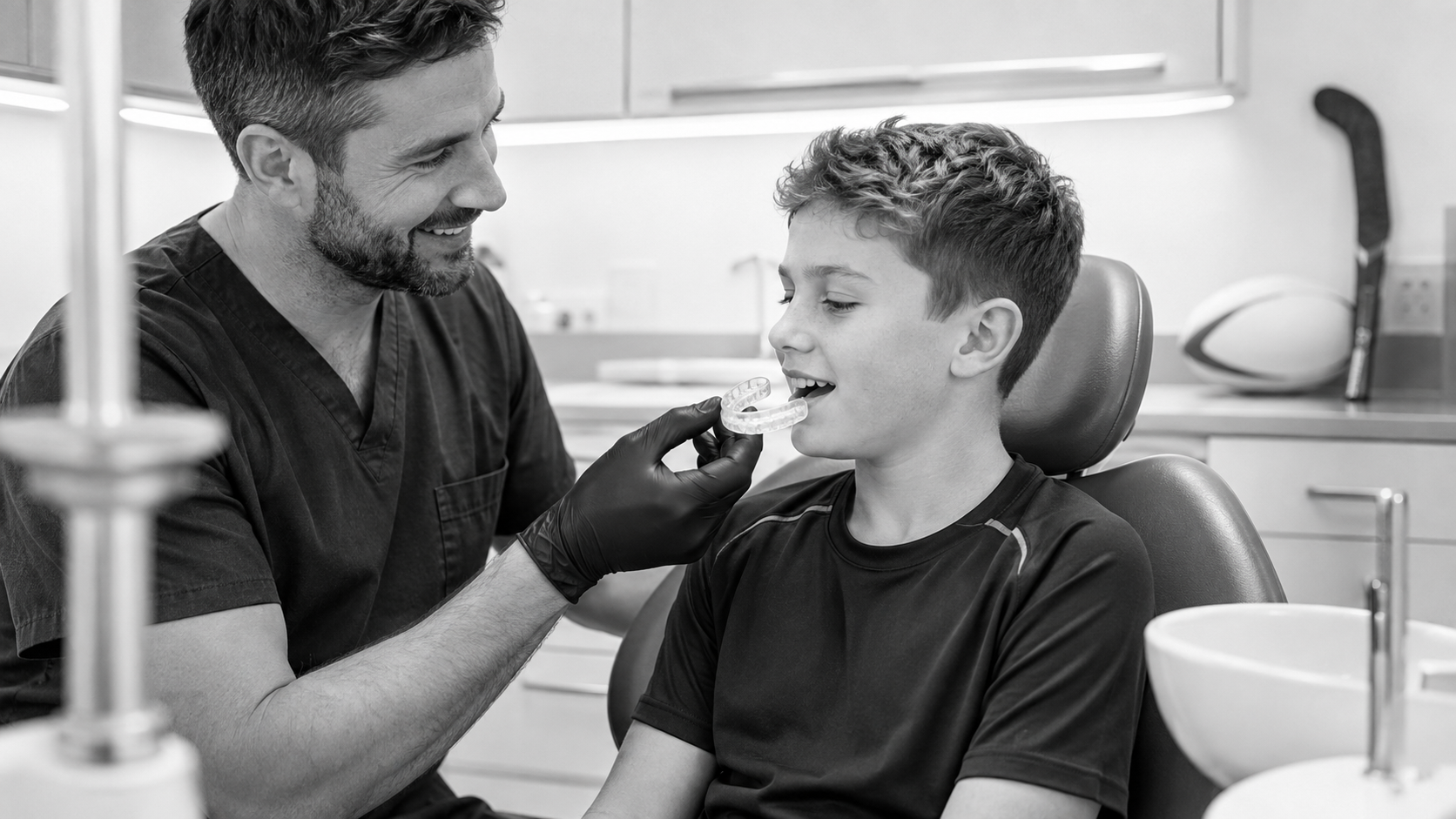
As children return to school and their autumn sports activities begin, parents are busy checking uniforms, replacing outgrown shoes and finding missing pieces of PE kit. However, one important item can easily be overlooked: a properly fitting sports mouthguard.
Rugby and hockey are obvious examples of sports where teeth can be at risk, but dental injuries can also happen during football, basketball, martial arts, gymnastics, skateboarding and other physical activities.
A mouthguard may be small, but it can make a significant difference if a child receives an accidental knock to the face.
What Does a Sports Mouthguard Do?
A sports mouthguard is worn over the teeth to help cushion the impact of a blow to the mouth or jaw. It can reduce the likelihood or severity of injuries involving the:
- Teeth
- Gums
- Lips and cheeks
- Tongue
- Supporting bone around the teeth
No mouthguard can prevent every injury. However, wearing one provides an important layer of protection during training and competitive matches.
Which Sports Require a Mouthguard?
Some schools and sports clubs insist that children wear mouthguards for activities such as rugby and hockey. Even when a mouthguard is not compulsory, it may still be a sensible precaution.
A mouthguard should be considered for any activity where there is a realistic possibility of:
- Contact with another player
- Being struck by a ball, stick or piece of equipment
- Falling onto a hard surface
- Receiving an accidental elbow or knee to the face
Dental injuries do not only happen in aggressive or full-contact sports. A simple collision or badly timed fall can be enough to chip, loosen or completely knock out a tooth.
Are Shop-Bought Mouthguards Good Enough?
Parents will usually encounter three main types of mouthguard.
Ready-Made Mouthguards
These are available in standard sizes and can be worn immediately. They are generally the least expensive option, but their fit can be loose or uncomfortable.
A poorly fitting mouthguard may move around inside the mouth, making it harder for a child to speak, breathe comfortably or concentrate on the activity.
Boil-and-Bite Mouthguards
These mouthguards are softened in hot water and then shaped around the teeth. They can provide a better fit than a ready-made product, although the result depends on how carefully the fitting instructions are followed.
They can also gradually lose their shape or become uncomfortable as a child’s teeth and jaws develop.
Custom-Made Mouthguards
A custom mouthguard is made specifically for the individual child using an accurate impression or digital record of their teeth.
Because it follows the shape of the mouth, it should feel more secure and comfortable than a standard alternative. This can make a child more likely to keep it in place throughout a training session or match.
A secure fit can also make communication and breathing easier, which is particularly important during energetic sports.
Children’s Mouths Keep Changing
A mouthguard that fitted last season may no longer fit properly this year.
Children’s teeth and jaws continue to develop, while baby teeth are lost and adult teeth emerge. Orthodontic treatment, new fillings and other dental work can also affect the fit.
Before reusing an older mouthguard, check whether it:
- Still sits securely over the teeth
- Feels tight, loose or uncomfortable
- Has split, warped or developed sharp edges
- Interferes with breathing or speech
- Shows signs of significant wear or damage
If there is any doubt, bring the mouthguard to your child’s next dental appointment so it can be checked.
Can Children With Braces Wear Mouthguards?
Children undergoing orthodontic treatment may still be able to participate in sport, but they require suitable protection.
Braces can increase the risk of cuts to the inside of the lips and cheeks if a child is hit in the mouth. The mouthguard must also leave enough room for teeth to move during treatment.
A standard mouthguard may not provide the right fit, so speak to your dentist or orthodontic team before choosing one.
How Should a Mouthguard Be Looked After?
A mouthguard should be cleaned after every use. Rinse it with cool water and gently brush it using a separate soft toothbrush. Avoid very hot water, as heat may distort its shape.
Allow it to dry before placing it in a ventilated protective case. The case should also be cleaned regularly.
Do not leave a mouthguard loose inside a sports bag, where it can collect dirt and bacteria or become damaged by other equipment. It should also be kept away from pets, which often find mouthguards particularly tempting to chew.
What Should You Do Following a Dental Injury?
Even when a mouthguard is worn, accidents can still happen. A child should receive prompt dental advice if a tooth is:
- Chipped or fractured
- Knocked loose or moved out of position
- Completely knocked out
- Painful following an impact
- Bleeding around the gum
- Suddenly sensitive or discoloured
Some damage is not immediately obvious. If a child receives a significant blow to the mouth, arranging a dental assessment can help identify injuries beneath the surface.
If an adult tooth is knocked out, hold it by the crown rather than the root. If it is visibly dirty, rinse it very briefly and gently. Do not scrub it. Contact an emergency dentist immediately, as acting quickly may improve the possibility of saving the tooth.
A knocked-out baby tooth should not be placed back into the socket, as this could damage the developing adult tooth underneath.
Protect Their Smile This Sporting Season
A suitable mouthguard is a simple precaution that can help protect a child’s teeth throughout the school sports season. The most important considerations are that it fits securely, feels comfortable and remains in good condition.
If you are unsure which type of mouthguard is suitable, or whether last year’s mouthguard still fits, The London Road Dental Practice can provide professional advice.
Contact our friendly team in Coalville to arrange an appointment and help keep your child’s smile protected both on and off the pitch.