
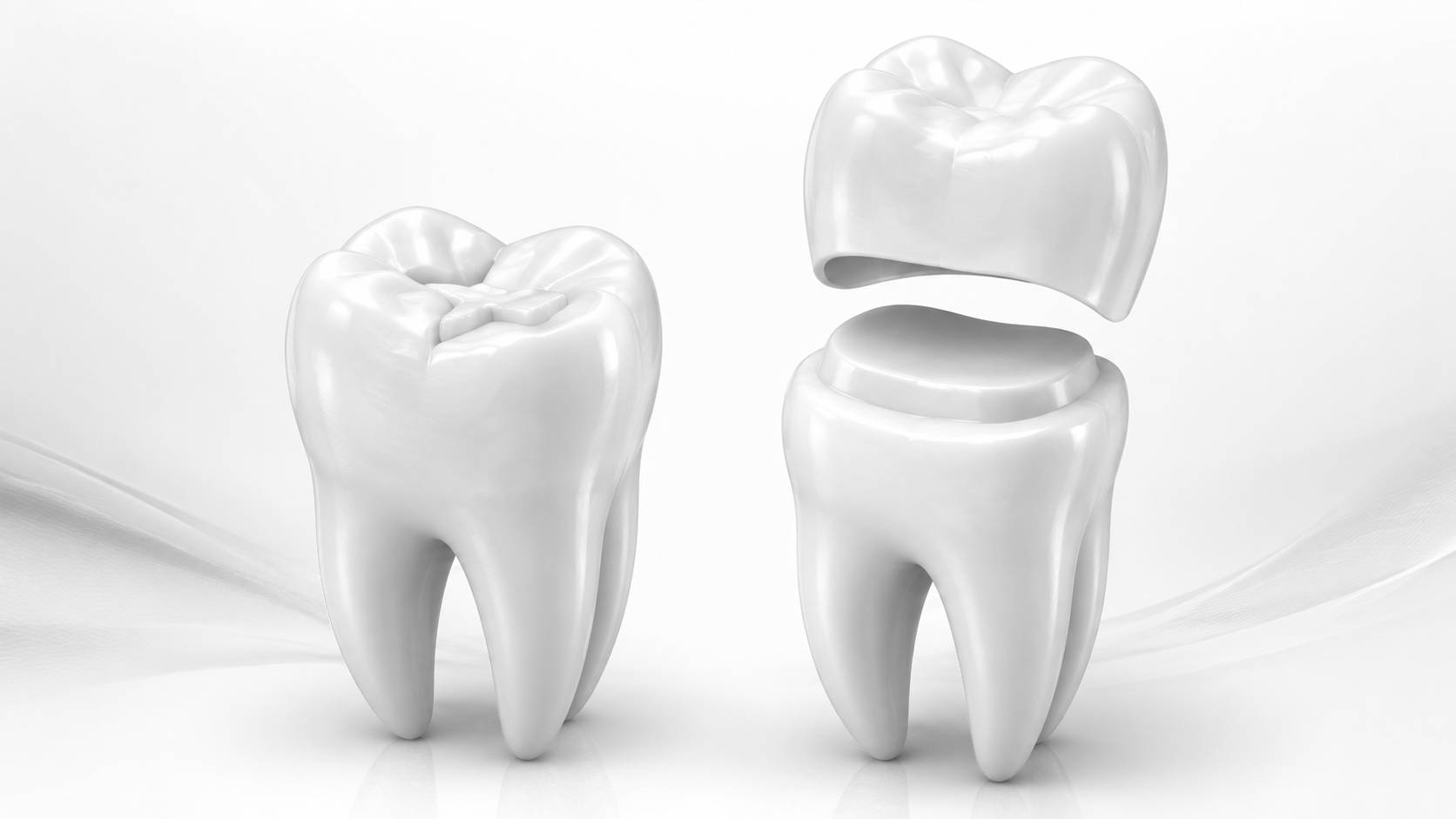
If you have a damaged or decayed tooth, you might assume the solution will simply be a filling. For many teeth, it is. But when a tooth has lost a significant amount of its natural structure, another filling may not provide enough strength or protection.
In these situations, your dentist may recommend a dental crown.
But how does a dentist decide whether a tooth needs a filling or a crown, and why can’t a large filling always do the job?
What Is the Difference Between a Filling and a Crown?
A dental filling is used to replace a section of tooth that has been damaged, usually by decay, wear or a small fracture.
The damaged area is removed and the remaining space is restored with a suitable filling material. This allows the dentist to preserve as much healthy natural tooth as possible.
A crown works differently.
Sometimes called a cap, a crown covers the prepared tooth and restores its shape, appearance and function. Rather than simply filling a damaged area, it can provide protection for a tooth that has become significantly weakened.
The NHS describes a crown as a cap that completely covers a real tooth.
When Is a Filling Usually Enough?
If the damage or decay is relatively limited and there is plenty of healthy tooth remaining, a filling may be all that is required.
Your dentist will assess factors including:
- How much healthy tooth remains
- Where the damage is located
- The size of any existing filling
- Whether the tooth is cracked
- The forces placed on the tooth when you bite
- Whether the tooth has previously undergone root canal treatment
The aim is not to automatically choose the biggest restoration. Wherever appropriate, modern dentistry seeks to preserve healthy natural tooth structure.
When Might a Crown Be Recommended?
There are several situations where your dentist may feel that a crown offers a more suitable long-term solution.
The Tooth Has a Very Large Filling
Teeth that have been filled several times over the years can eventually reach a point where there is more filling than natural tooth remaining.
Replacing an increasingly large filling isn’t always the best answer. The remaining walls of the tooth can become thin and potentially vulnerable to cracking or breaking under the pressure of everyday chewing.
A crown may be recommended to restore and protect what remains of the tooth.
Part of the Tooth Has Broken Away
Biting something unexpectedly hard can sometimes cause part of a tooth to fracture.
The appropriate treatment depends on the extent and position of the fracture. A small chip may require only a relatively simple restoration, while a more substantial break may require a crown.
It is worth having a broken tooth assessed even when it doesn’t hurt. Lack of pain doesn’t necessarily mean the tooth hasn’t been damaged.
The Tooth Has Been Root Canal Treated
Root canal treatment can save a tooth that might otherwise need to be extracted.
Once treatment is completed, however, the tooth may require a suitable final restoration. The NHS notes that a crown may be needed following root canal treatment, particularly where a tooth has been badly affected. NHS guidance
The best restoration depends on the individual tooth and how much healthy structure remains.
The Tooth Is Cracked
Cracks in teeth can range from tiny surface lines to more significant fractures.
You may notice pain when biting or releasing your bite, although symptoms vary considerably.
Depending on the type and extent of the crack, a dentist may recommend a crown or another restoration to protect the tooth. More serious cracks can require different treatment, which is one reason early assessment is important.
What About an Onlay?
It isn’t always a straight choice between a filling and a full crown.
For some teeth, an onlay may be appropriate.
An onlay is a custom-made restoration designed to replace and protect damaged sections of a tooth without necessarily covering the entire tooth in the same way as a conventional crown.
Your dentist can advise which approach is most suitable after examining the tooth.
Does Having a Crown Hurt?
The tooth is normally prepared using local anaesthetic, so the aim is to keep you comfortable during treatment.
The dentist prepares the tooth so that the crown can fit accurately over it. Depending on the technique being used, measurements or scans may then be taken so that a crown can be produced to fit your tooth and bite.
You may have a temporary restoration while the final crown is being made.
Once ready, the crown is carefully fitted, your bite is checked and any necessary adjustments are made.
How Long Does a Dental Crown Last?
There isn’t a single lifespan that applies to every crown.
Longevity can be affected by your oral hygiene, diet, the condition of the underlying tooth, your bite and habits such as grinding or clenching your teeth.
A crowned tooth still needs looking after.
Brushing twice daily with fluoride toothpaste and cleaning between your teeth remain important because the natural tooth underneath the crown can still experience problems, particularly around the crown margin.
Regular dental examinations also allow your dentist to monitor both the crown and the underlying tooth.
Can an Old Crown Be Replaced?
Yes. Crowns are not necessarily lifetime restorations.
Over time, a crown can become worn, damaged or loose. Occasionally, changes to the underlying tooth can also mean that a crown needs attention.
If you have a crown that feels loose, has broken, feels different when you bite or has become uncomfortable, arrange a dental appointment rather than waiting for it to become painful.
Filling or Crown? Every Tooth Is Different
There is no simple rule that says a particular size of cavity automatically requires a crown.
Your dentist needs to consider how much healthy tooth is left, the location of the damage, previous dental treatment and the forces the tooth will experience when you bite and chew.
Sometimes a straightforward filling is the best option. In other cases, continually repairing a heavily restored tooth with larger fillings may no longer provide the protection it needs.
At The London Road Dental Practice in Coalville, we offer fillings, crowns and other restorative dental treatments designed to preserve and restore your natural teeth wherever possible.
If you have broken a tooth, lost a filling or have an older heavily filled tooth that is beginning to cause problems, contact our team to arrange an assessment.