
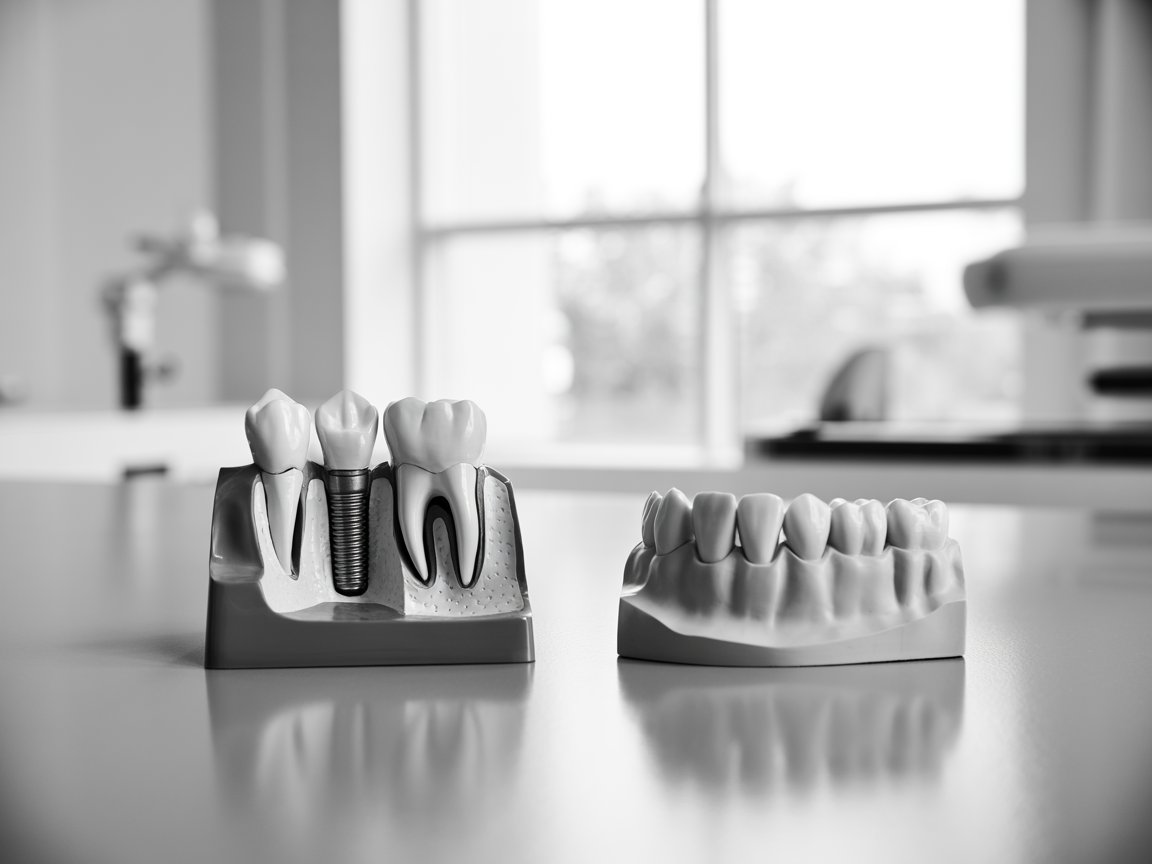
When a tooth is lost, it is easy to focus only on how it looks. In reality, replacing a missing tooth is just as important for long-term oral health, bite stability, and comfort. Two of the most common solutions offered by dentists are dental implants and dental bridges, but many patients are unsure which option is right for them.
Understanding the key differences can help you make a more confident decision.
What Is a Dental Bridge?
A dental bridge is designed to “bridge” the gap left by a missing tooth. It is usually supported by the natural teeth on either side of the gap, which are shaped to hold crowns. The artificial tooth sits between them, restoring appearance and basic function.
Bridges have been used for many years and can be a suitable option in certain situations. They can often be completed relatively quickly and do not involve surgery. However, because they rely on neighbouring teeth for support, those teeth need to be altered even if they are otherwise healthy.
What Is a Dental Implant?
A dental implant replaces the tooth from the root upwards. A small titanium post is placed into the jawbone, where it gradually integrates with the bone. Once healed, a crown is attached to restore the visible part of the tooth.
Because implants sit independently in the jaw, they do not rely on neighbouring teeth for support. This makes them a popular long-term solution for replacing missing teeth, especially when preserving surrounding teeth is a priority.
Patients exploring tooth replacement options often want to understand how dental implants in Leicester compare to bridges in terms of durability, comfort, and overall value.
Longevity and Durability
One of the biggest differences between implants and bridges is lifespan. Dental bridges can last many years with good care, but they may eventually need replacing due to wear, decay in the supporting teeth, or changes in the gums.
Dental implants are designed as a long-term solution. With proper oral hygiene and regular dental check-ups, implants can last for decades. Because the implant integrates with the jawbone, it provides a stable foundation that closely mimics a natural tooth.
Impact on Surrounding Teeth
Bridges require the dentist to reshape healthy teeth on either side of the gap. While this is sometimes unavoidable, it does mean sacrificing some natural tooth structure.
Implants do not affect adjacent teeth. This makes them an attractive option for patients who want to maintain as much of their natural dentition as possible.
Jawbone Health
When a tooth is lost, the jawbone beneath it no longer receives stimulation from chewing. Over time, this can lead to bone loss in that area.
Bridges sit on top of the gums and do not stimulate the jawbone. Dental implants, however, act like a natural tooth root and help maintain bone density. This can support facial structure and reduce the risk of future dental issues.
Appearance and Comfort
Both bridges and implants are designed to look natural, and when done well, either option can blend seamlessly with surrounding teeth. However, implants often feel more like natural teeth because they are fixed securely into the jaw.
Bridges may feel slightly different at first, particularly where the artificial tooth rests on the gums. Some patients adapt quickly, while others prefer the stability that implants provide.
Cost Considerations
Bridges are often less expensive initially than implants, which can make them appealing in the short term. However, because bridges may need replacing over time, the long-term cost can increase.
Implants usually involve a higher upfront investment, but their durability and low maintenance needs can make them more cost-effective over the long term. A dentist can explain the expected lifespan of each option and help you weigh initial cost against long-term value.
Which Option Is Right for You?
The best choice depends on several factors, including the health of surrounding teeth, jawbone condition, budget, and personal preference. Some patients may be better suited to a bridge, while others benefit more from an implant-based solution.
If you are considering long-term tooth replacement and want to explore whether implants are suitable for you, you can find more information about dental implants in Leicester on the London Road Dental Practice website.
Final Thoughts
Replacing a missing tooth is about more than restoring a smile. It is an investment in long-term oral health and comfort. By understanding the differences between dental implants and bridges, you can have a more informed conversation with your dentist and choose the solution that best fits your needs.